In the product
What it looks like
Screens from the live platform, demo tenant. Click any screen to open it full size.
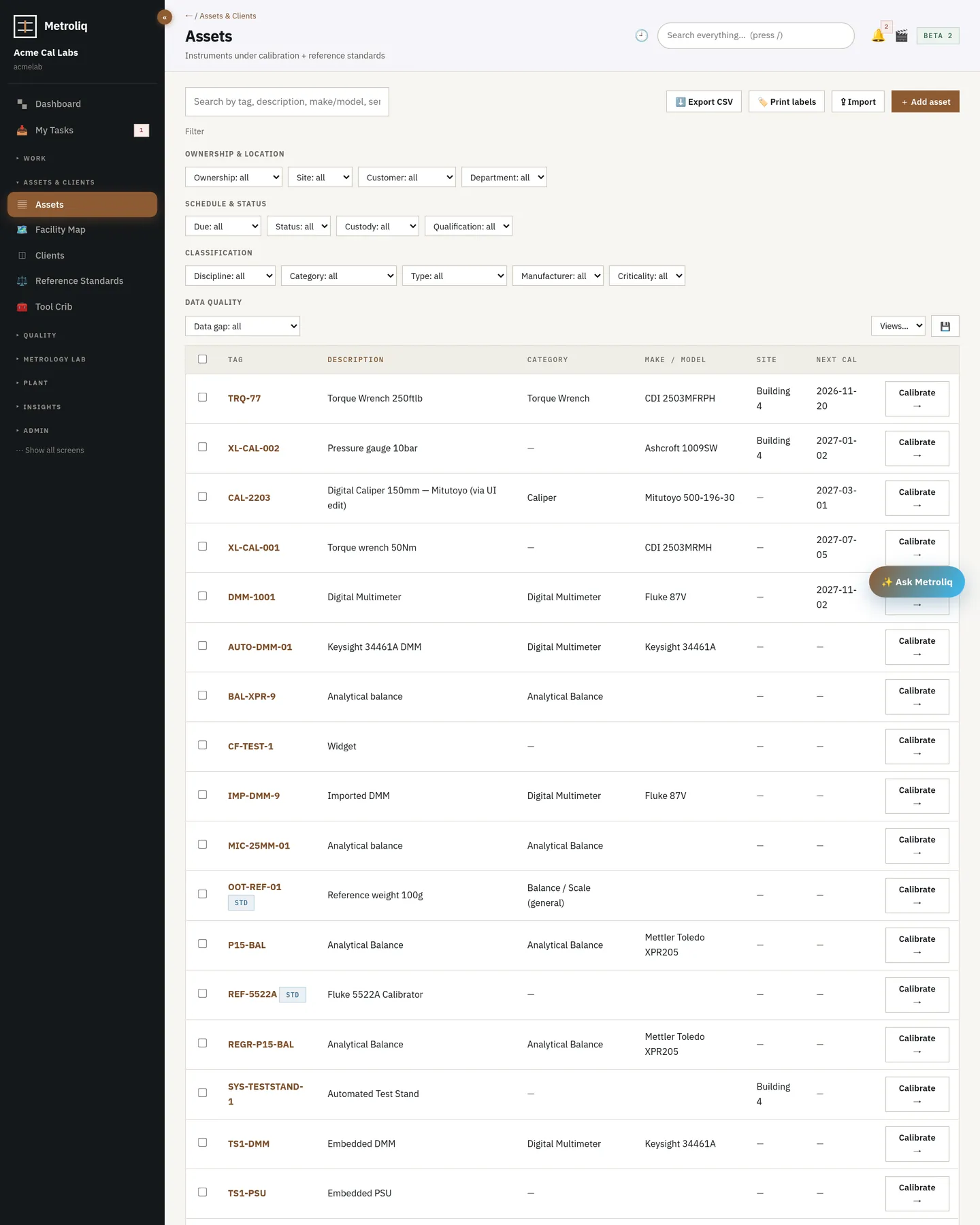
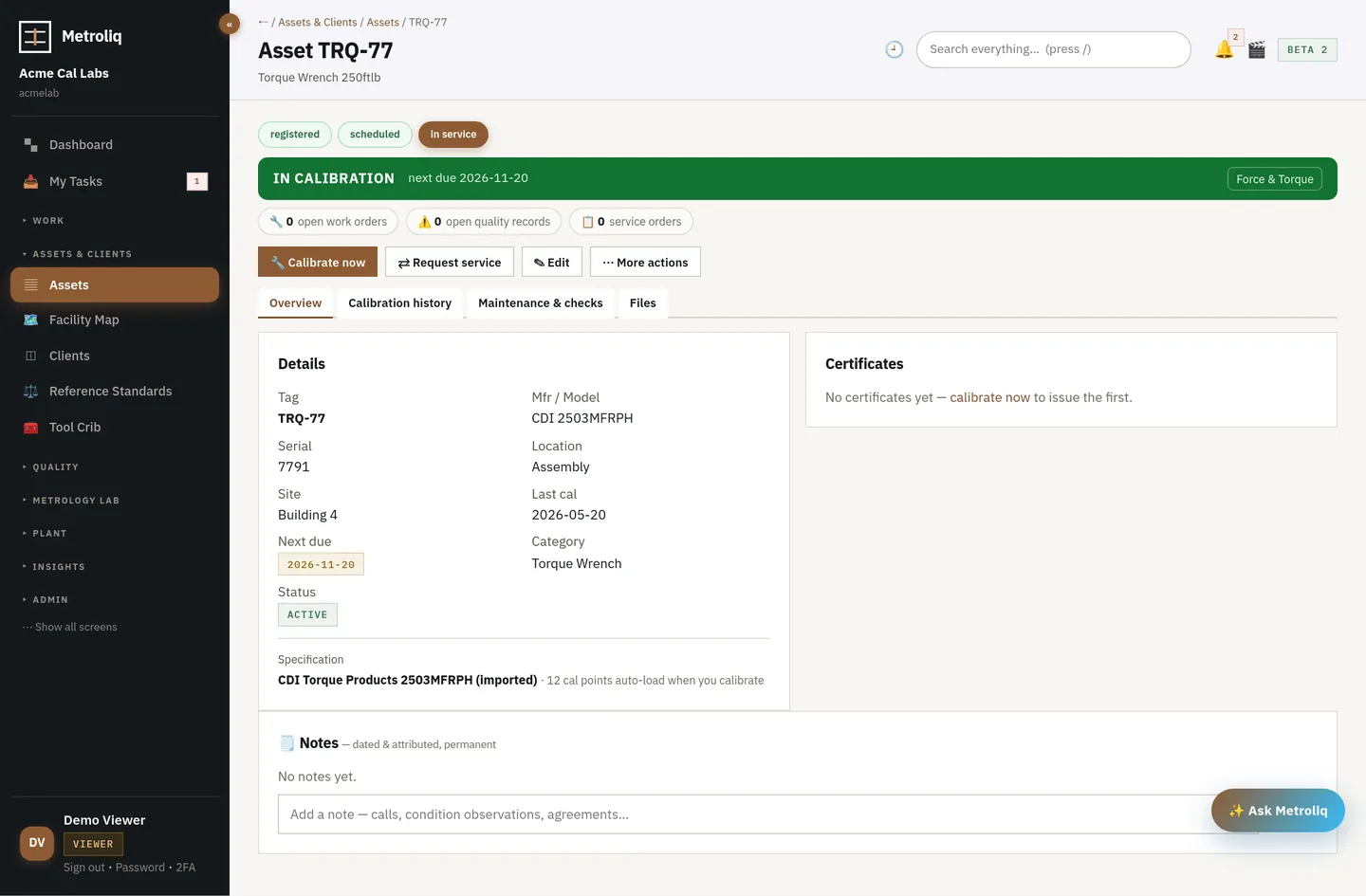
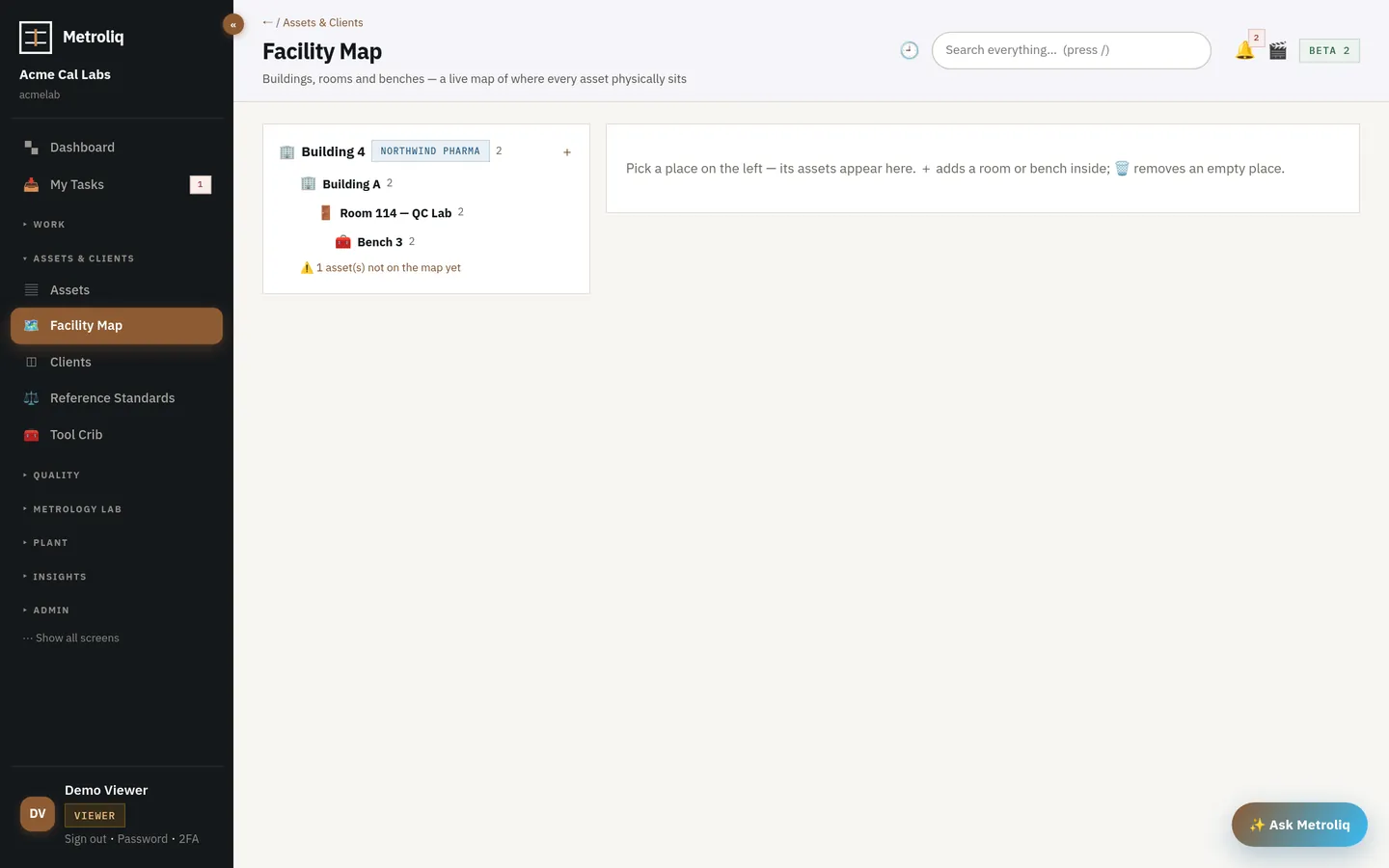
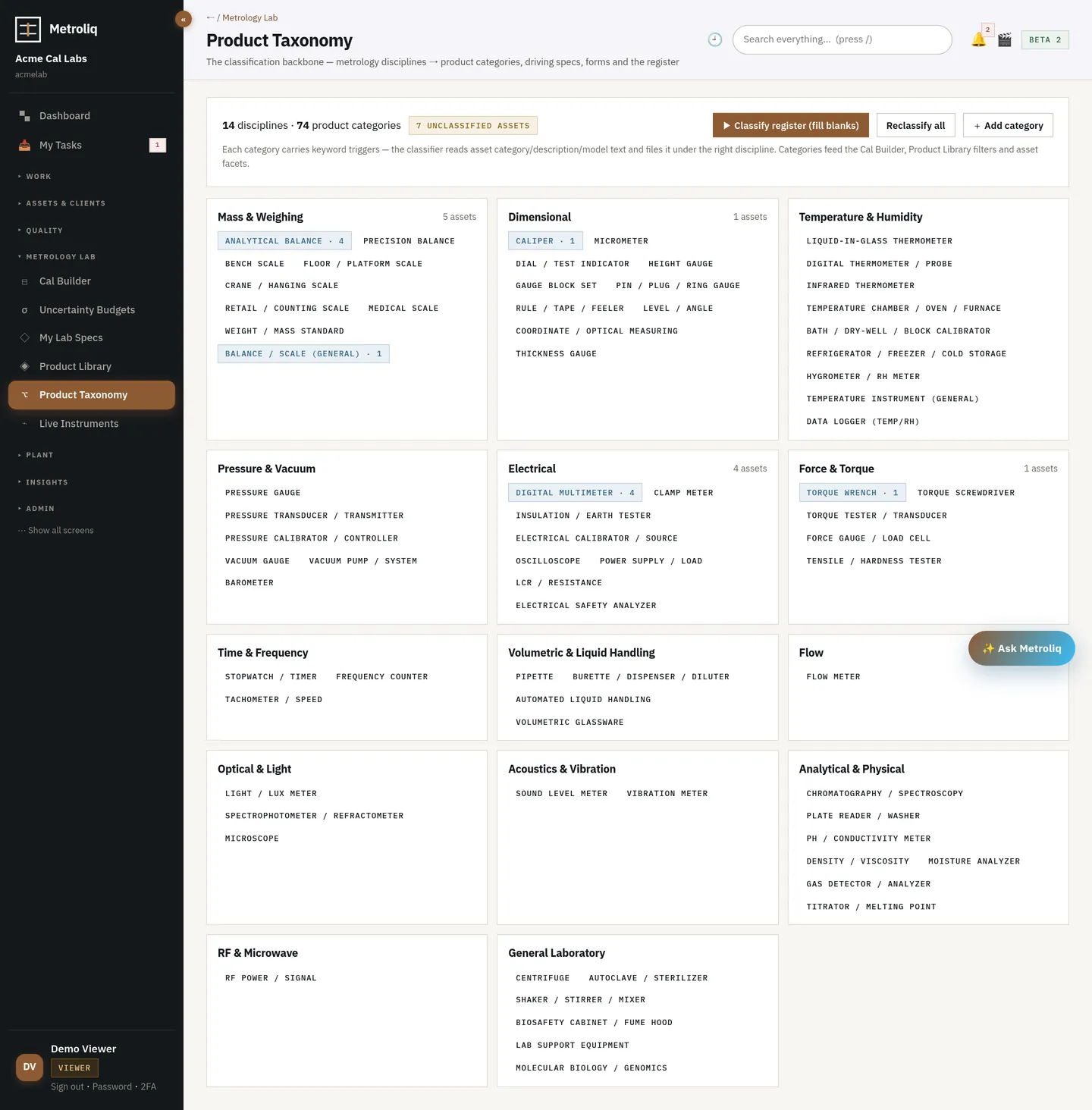
A real hierarchy — customer → site → building → room → bench, with parent and component systems — typed specifications with provenance, custody, meters, cycles, a GxP logbook and reverse traceability.
Specifications are pulled from the manufacturer datasheet by the AI and stored with the document, revision and clause. A living facility map places every asset; recurring rounds walk gauges in floor order. Asset status under GxP control changes only through an e-signed action.
Screens from the live platform, demo tenant. Click any screen to open it full size.
By hand, by import with AI-mapped columns, or from the product catalog with the specification attached.
Typed tolerances with document, revision and clause; AI-assisted specs carry the flag to the certificate.
Site, building, room, bench; custodian, criticality, custom fields.
GxP status control: status changes are e-signed actions; the logbook is append-only.
Reverse traceability: from the asset to every certificate, standard, work order and CAPA it touched — as a graph.
A quality system is defined as much by what it will not accept. These are enforced in the platform, not in a procedure.
Rejected (400).
Refused (409); status moves only through the e-signed change-status action.
The flag is cleared unless the specification origin is the manufacturer; the certificate then says nothing about AI.
A real hierarchy — customer → site → building → room → bench, with parent and component systems — typed specifications with provenance, custody, meters, cycles, a GxP logbook and reverse traceability.
An illustration of the extractor's job: recognise the tolerance type, split its terms, and record where it came from.
The calibration lab and the maintenance team work on the same asset. A specification entered once is used by both.
Document, revision, clause — and whether the AI helped. It prints on the certificate.
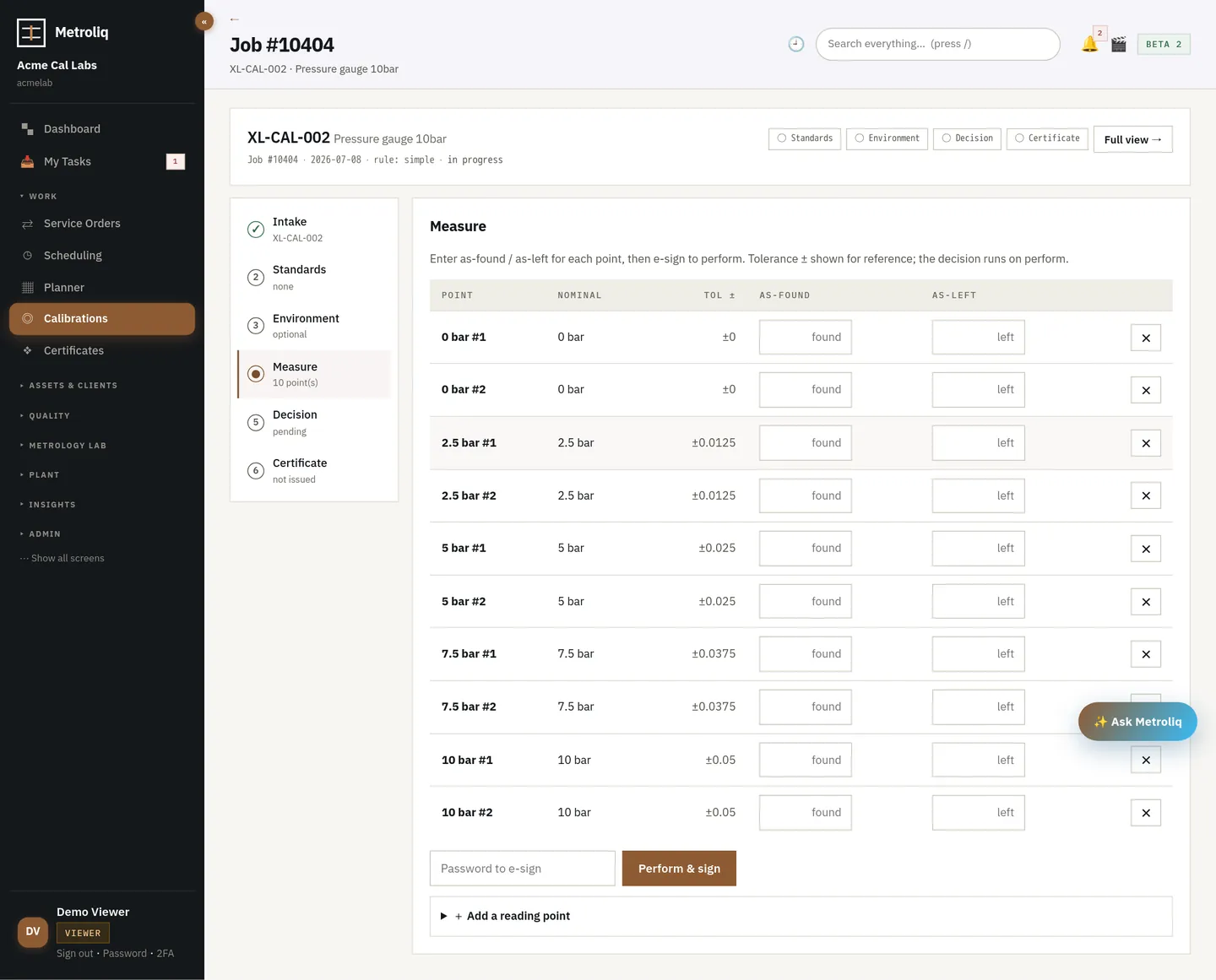 Calibration & uncertaintyCalibration & uncertaintyThe verdict is computed, not typed.Every calibration is a numbered event that carries its own points, readings, reference standards, environment and decision rule — and evalua…
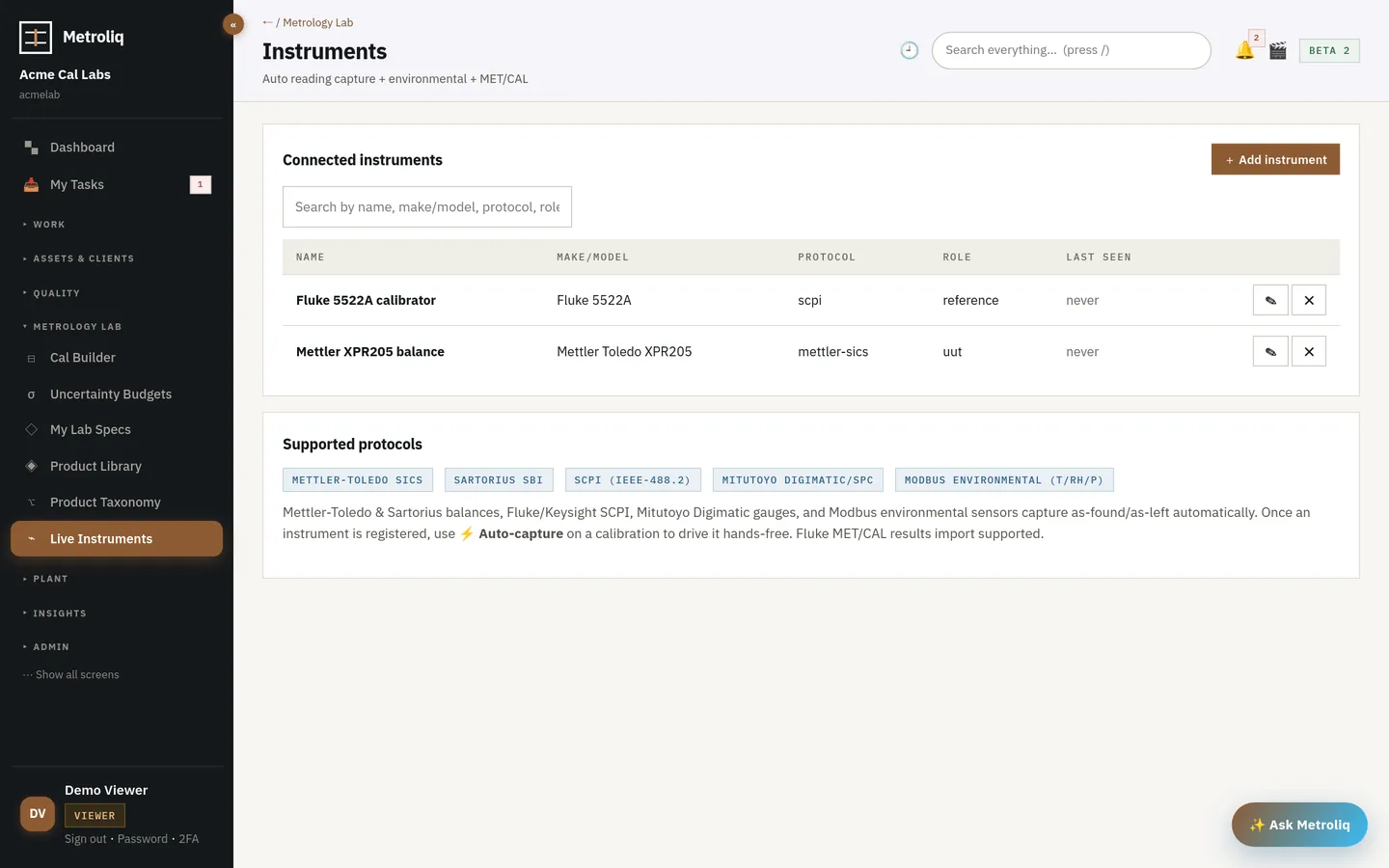 Instruments · bench capture · environmentInstruments & hands-free captureReadings captured at the bench, checked as they land.Real device drivers — Mettler-Toledo and Sartorius balances, Fluke and Keysight SCPI instruments, Mitutoyo Digimatic, Modbus sensors — drive…
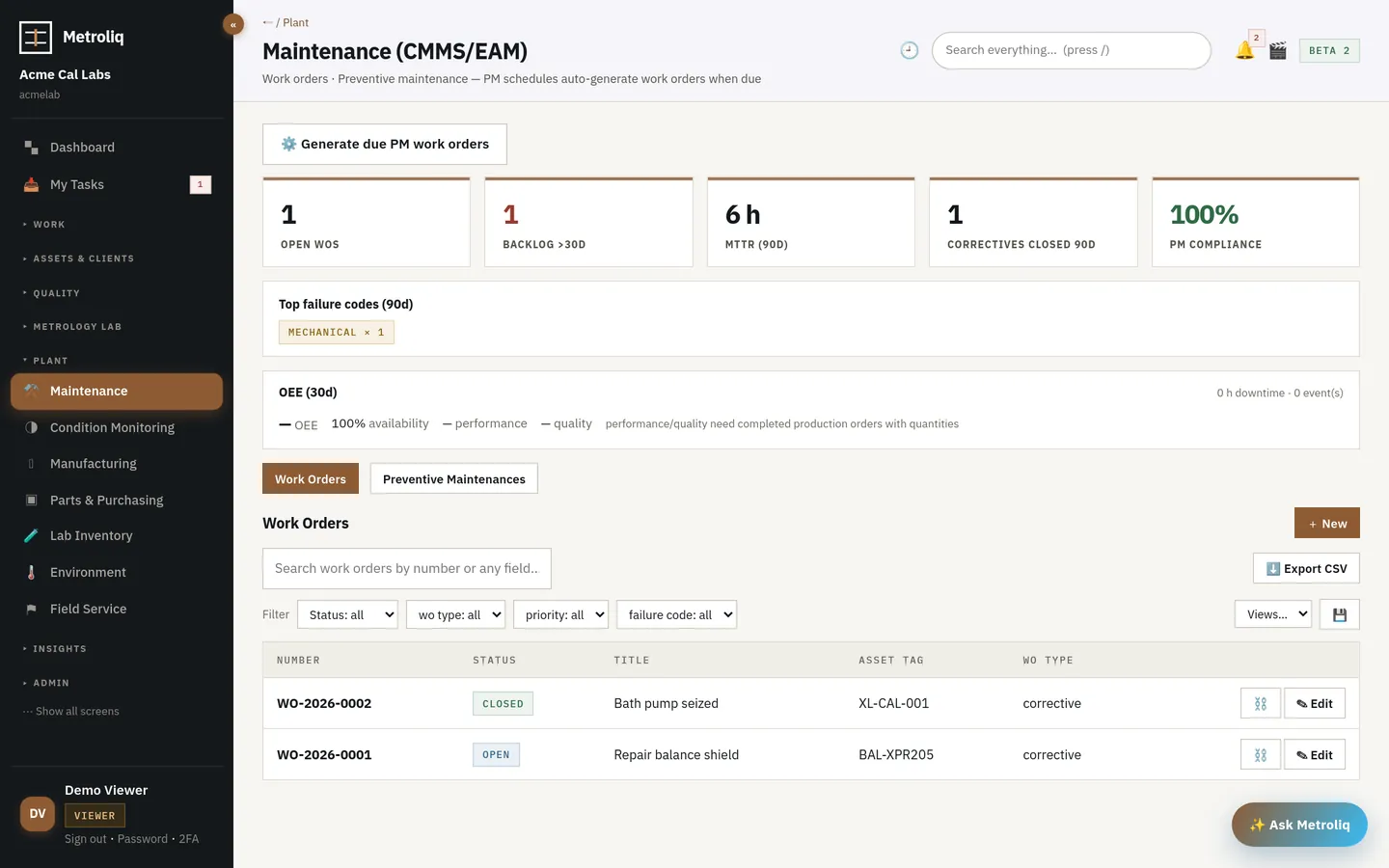 Maintenance · CMMS · condition monitoringMaintenance (CMMS)One asset. Its whole life.Work orders with failure, cause and remedy codes, preventive maintenance by interval or meter, and condition-based rules that raise work fro…
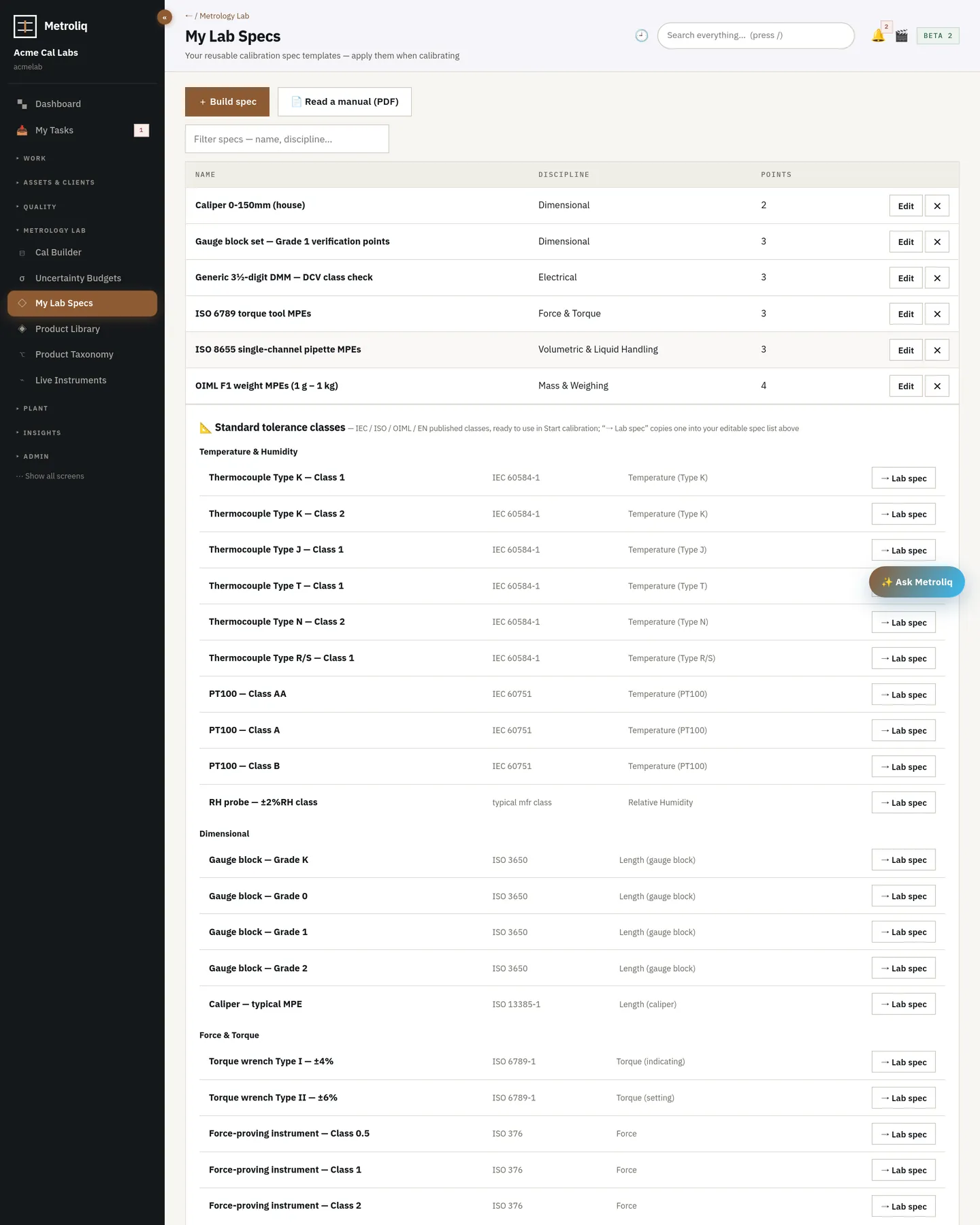 AI-native · builders · provenanceAI builders & provenanceThe AI drafts. Humans sign. Every draft is on the ledger.Drop a manufacturer datasheet and get a typed specification and a five-facet measurement form. Drop an old certificate PDF and get a templat…
The tour runs the working platform, not a mockup. Pilot on your own instruments with your own imported history — we set it up with you, and fixes ship in hours and days, not release cycles.